 English
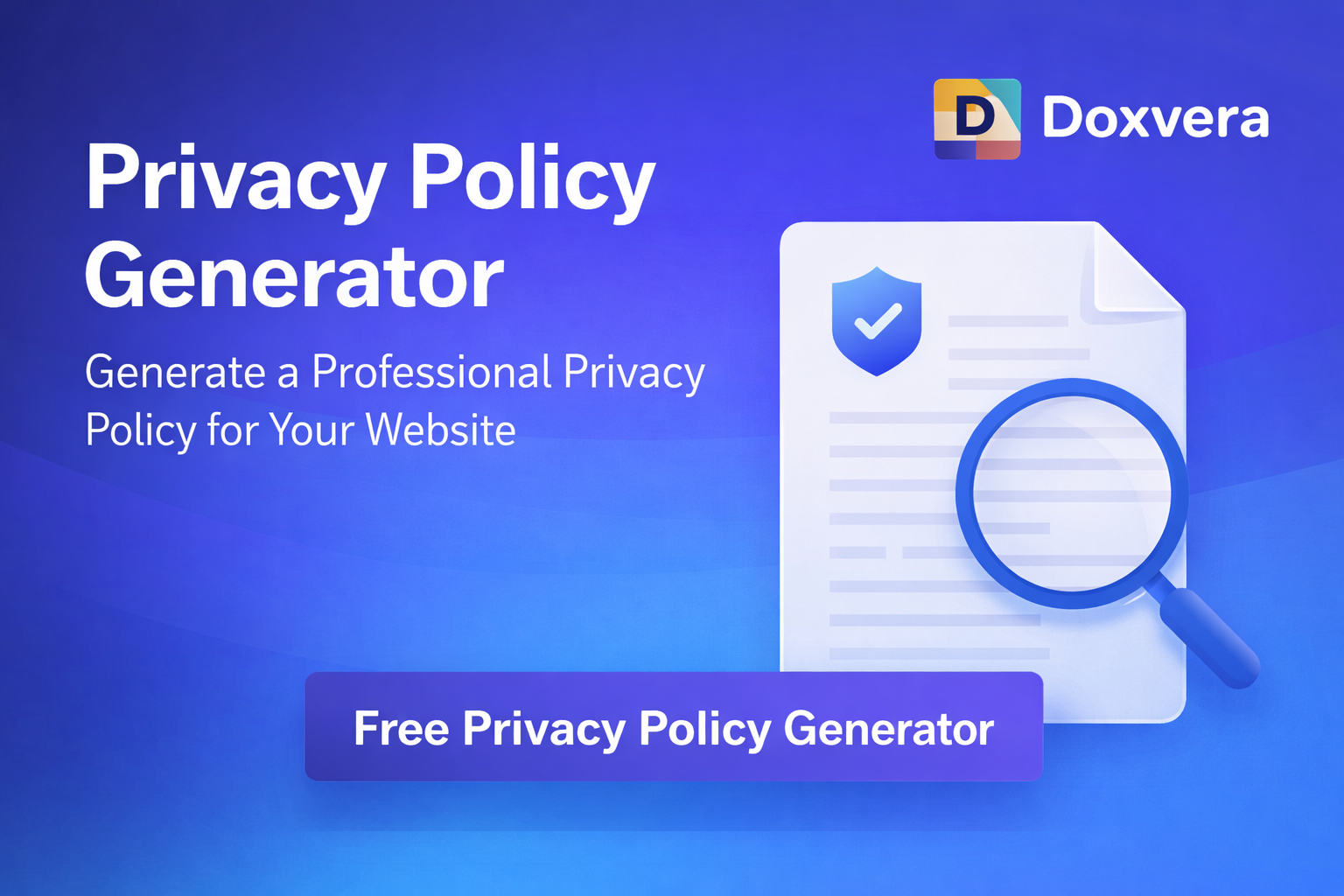
Privacy Policy Generator
Generate a Professional Privacy Policy for Your Website
Privacy Policy Generator is a free online tool designed to help website owners, bloggers, app developers, e-commerce businesses, SaaS companies, freelancers, agencies, and online entrepreneurs create a professional privacy policy in just a few minutes. Instead of spending hours writing legal text from scratch, you can generate a complete privacy policy that explains how your website or business collects, uses, stores, and protects user data.
A privacy policy is one of the most important pages for any website. Even if your website is simple and only has a contact form or analytics tool, you may still be collecting personal information from users. Many website owners do not realize that they are already collecting data through cookies, IP addresses, browser details, email forms, newsletter signups, payment systems, advertising platforms, and analytics tools.
When people visit your website, they want to know what information is being collected, why it is being collected, and how it is being used. A privacy policy gives them that information in a clear and transparent way.
Having a privacy policy is not only useful for building trust, but it may also be required by law depending on where your users are located. Regulations such as GDPR, CCPA, CalOPPA, PIPEDA, and other privacy laws require many businesses to explain how they collect and process personal data.
What is a Privacy Policy?
A privacy policy is a legal document that explains how a website, app, or business collects, uses, stores, shares, and protects user information.
This information may include names, email addresses, phone numbers, IP addresses, payment information, device details, browser information, location data, cookies, and other personal details.
For example, if a visitor fills out a contact form on your website, you may collect their name and email address. If your site uses analytics software such as Google Analytics, you may also collect IP addresses, device types, pages visited, session duration, and referral sources.
A privacy policy helps explain all of this in a simple and professional way.
Why is a Privacy Policy Important?
A privacy policy is important because it helps build trust between you and your users. People are more likely to use your website, subscribe to your newsletter, create an account, or make a purchase if they know their information is handled properly.
Without a privacy policy, users may feel uncomfortable sharing their personal details. They may also leave your website if they think their information is not protected.
A privacy policy can also help protect your business legally. If you explain how you collect and use data, you reduce the risk of misunderstandings and complaints.
Having a privacy policy can help you:
- Build trust with visitors
- Show professionalism
- Comply with privacy laws
- Protect your business
- Explain your data practices clearly
- Improve transparency
- Reduce customer concerns
- Meet advertising and platform requirements
Who Needs a Privacy Policy?
Almost every website, app, or online business should have a privacy policy.
You should have a privacy policy if your website:
- Uses contact forms
- Collects email addresses
- Offers newsletters
- Uses cookies
- Uses analytics tools
- Shows ads
- Accepts payments
- Has user accounts
- Uses affiliate links
- Tracks visitors
- Uses social media plugins
- Stores customer information
Even if your website is small, you may still need a privacy policy because most websites collect some type of user information.
Examples of Information Collected by Websites
Many website owners do not realize how much information is collected automatically. Some common examples include:
- Name
- Email address
- Phone number
- Mailing address
- Payment information
- IP address
- Location data
- Browser type
- Device type
- Cookies
- Usage data
- Login information
- Purchase history
- Referral sources
- Pages visited
A privacy policy should explain exactly what information is collected and why.
Why Use a Privacy Policy Generator?
Writing a privacy policy manually can be difficult, especially if you are not familiar with legal terms or privacy regulations. Many business owners do not know what sections to include or how to explain their data practices correctly.
A Privacy Policy Generator makes the process much easier. Instead of writing everything yourself, you can use a ready-made template that includes the most important sections.
This saves time and helps ensure that your privacy policy looks professional and complete.
With a Privacy Policy Generator, you can:
- Create a privacy policy quickly
- Save time
- Avoid writing legal text from scratch
- Cover the most important sections
- Customize the policy for your business
- Generate a policy for websites, apps, blogs, and stores
Privacy Policy for Websites
Most websites need a privacy policy because they collect information through contact forms, cookies, analytics, or advertising tools.
For example, if your website uses Google Analytics, Google AdSense, Facebook Pixel, or email subscription forms, you are already collecting user data.
A privacy policy helps explain this clearly to visitors.
Privacy Policy for Blogs
Bloggers also need privacy policies, especially if they use advertising, affiliate links, newsletters, analytics tools, or comment sections.
Many blogs use Google Analytics to track traffic and user behavior. Others collect email addresses through newsletter forms. Even simple blogs often use cookies and third-party tools.
This means a privacy policy is still important even for small blogs.
Privacy Policy for E-Commerce Stores
Online stores collect a lot of customer information. This may include names, shipping addresses, billing information, payment details, phone numbers, and purchase history.
Because of this, e-commerce websites need strong privacy policies that explain how customer data is collected and protected.
This is especially important for businesses using platforms such as Shopify, WooCommerce, Magento, BigCommerce, or custom e-commerce systems.
Privacy Policy for Mobile Apps
Mobile apps also need privacy policies. Many apps collect user information such as names, email addresses, locations, device IDs, and payment information.
App stores such as Google Play and the Apple App Store often require developers to provide a privacy policy before publishing an app.
If your app requests permissions such as camera access, microphone access, contacts access, or location tracking, having a privacy policy is especially important.
Privacy Policy and Cookies
Cookies are small files stored on a user's device when they visit a website. Cookies can be used for many purposes such as remembering login sessions, saving preferences, tracking analytics, and showing personalized ads.
Many privacy laws require websites to explain how cookies are used.
Your privacy policy should mention:
- What cookies are used
- Why cookies are used
- How users can disable cookies
- Whether third-party cookies are used
Privacy Policy and Third-Party Services
Many websites use third-party services that collect information from visitors. Examples include:
- Google Analytics
- Google AdSense
- Facebook Pixel
- Mailchimp
- Stripe
- PayPal
- Hotjar
- Cloudflare
- Affiliate networks
- Social media plugins
Your privacy policy should explain which third-party services you use and how they may collect or process user data.
Privacy Regulations Around the World
Many countries have privacy laws that require businesses to explain how they collect and use personal information.
Some important privacy regulations include:
- GDPR in Europe
- CCPA in California
- CalOPPA in the United States
- PIPEDA in Canada
- Privacy Act in Australia
- LGPD in Brazil
Even if your business is located in one country, you may still need to follow privacy laws from other countries if your website has international visitors.
How to Use the Privacy Policy Generator
- Enter your business or website name
- Select your business type
- Choose what information you collect
- Select any third-party tools you use
- Generate the privacy policy
- Review and customize the content
- Publish it on your website
The entire process usually takes only a few minutes.
Where Should You Put Your Privacy Policy?
Most websites place a privacy policy link in the footer so it appears on every page.
You can also link to it from:
- Signup forms
- Checkout pages
- Contact forms
- Cookie banners
- Registration pages
- Mobile app store listings
This makes it easy for users to access your privacy policy whenever they need it.
Benefits of Using a Privacy Policy Generator
- Fast and easy to use
- Saves time
- No legal experience required
- Professional-looking results
- Useful for websites and apps
- Supports compliance efforts
- Builds trust with users
- Free to use online
Conclusion
A privacy policy is one of the most important legal pages for any website, app, or online business. It helps explain how you collect, use, store, and protect user information.
Whether you run a personal blog, an e-commerce store, a SaaS platform, a mobile app, or a business website, having a privacy policy is essential for building trust and meeting privacy requirements.
Use our free Privacy Policy Generator to create a professional privacy policy in minutes and make sure your website is ready for users, platforms, and legal expectations.
Popular Tools
Recent Posts